The Complete Guide to Authentic Daieoteuguksu: A Korean Kitchen Masterclass
🇰🇷 The recipe below is based on official Korean MFDS (Ministry of Food and Drug Safety) data.
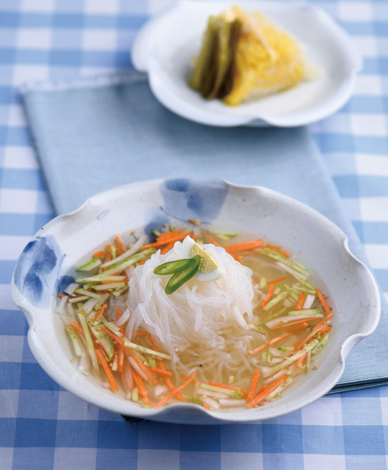
Seeking a refreshing, low-calorie Korean dish? This guide provides an authentic Daieteu Guksu (Diet Noodles) recipe, perfect for health-conscious food lovers. You’ll learn how to create a flavorful, light meal based on official MFDS (Ministry of Food and Drug Safety) data, ensuring both deliciousness and nutritional accuracy. This easy recipe combines crisp vegetables, a savory broth, and konjac noodles for a satisfying culinary experience.
### Ingredients
Here’s what you’ll need to make this delightful Korean diet noodle dish (serves 1):
* Shilkonnyak (Konjac Noodles): 200g
* (Mul-kimchi Gungmul, Water Kimchi Broth): 200g
* Oi (Cucumber): 25g, thinly julienned
* Dalgyal (Egg): 1 large (60g), hard-boiled and halved
* Danggeun (Carrot): 20g, thinly julienned
* Yangpa (Onion): 50g, thinly sliced
* Tongkkae (Toasted Sesame Seeds): 3g, for garnish
* Lemon Jeup (Lemon Juice): 15g
* Tansansu (Sparkling Water): 50ml
* Eoganjang (Fish Sauce): 5g (can substitute with a pinch of salt for vegetarian)
### How to Make Healthy Korean Noodles: Recipe
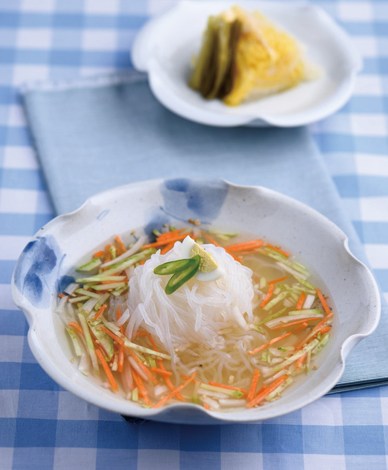
Follow these simple steps to prepare your light and delicious .
1. **Prepare Vegetables:** Wash and thinly julienne the cucumber and carrot. Slice the onion thinly. Set aside.
2. **Boil Egg:** Hard-boil the egg, cool, peel, and cut in half.
3. **Rinse Konjac Noodles:** Drain the konjac noodles and rinse them thoroughly under cold running water. This helps to remove the slight odor they sometimes have.
4. **Blanch Noodles (Optional but Recommended):** For a better texture and to eliminate any remaining konjac scent, quickly blanch the noodles in boiling water for 1-2 minutes. Drain well and rinse again with cold water to cool them down.
5. **Prepare the Broth:** In a mixing bowl, combine the mul-kimchi broth, lemon juice, sparkling water, and fish sauce. Stir well to ensure all ingredients are evenly mixed. Taste and adjust seasoning if necessary, keeping in mind the Mul-kimchi broth already has a distinct flavor.
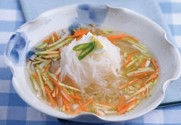
6. **Assemble the Dish:** Place the rinsed and cooled konjac noodles into a serving bowl. Arrange the julienned cucumber, carrot, and sliced onion over the noodles.
7. **Pour Broth and Garnish:** Gently pour the prepared cold broth over the noodles and vegetables. Place the halved hard-boiled egg on top. Finish by sprinkling with toasted sesame seeds.
### Cultural Context and History
is a modern adaptation of traditional Korean cold noodle dishes, reflecting a growing global interest in healthier eating while retaining authentic Korean flavors. While classic Korean noodles like *Naengmyeon* (cold buckwheat noodles) are often enjoyed, utilizes konjac noodles, a zero-calorie alternative, to create a similar refreshing experience without the carbohydrate load. It’s a testament to Korean culinary innovation, blending time-honored techniques with contemporary health trends.
### Nutrition Information
Based on official MFDS data (per serving):
| Nutrient | Amount |
|:———— |:————– |
| Calories | 36.9 kcal |
| Protein | 4.6 g |
| Fat | 1.8 g |
| Carbohydrates | 1.9 g |
| Sodium | 350 mg |
| Dietary Fiber | 3.5 g |
### Chef’s Notes & Mom’s Tips
* **Mom’s Tip on Konjac Noodles:** Don’t skip rinsing and blanching the konjac noodles. This step is crucial for achieving the best texture and removing the distinct aroma that some people find off-putting. Rinse until there’s no noticeable scent.
* **Broth Temperature:** Ensure your mul-kimchi broth and sparkling water are thoroughly chilled before mixing. A truly cold broth is key to the refreshing experience of this dish.
* **Customizing Flavor:** If you find the broth too bland or too strong, adjust with a tiny pinch of salt or a splash more sparkling water to your liking. The lemon juice is vital for brightening the flavors.
### Frequently Asked Questions (FAQ)
**Q: Can I use other types of noodles?**
A: While you can substitute with other low-carb noodles like zucchini noodles or kelp noodles, silkonnyak (konjac noodles) are specifically chosen for their minimal calories and unique chewy texture, which is a hallmark of authentic .
**Q: Is mul-kimchi broth spicy?**
A: Mul-kimchi (water kimchi) broth is typically not spicy, unlike regular kimchi. It’s usually a clear, refreshing, tangy, and slightly savory broth, making it ideal for a light noodle dish. If you prefer a hint of spice, you can add a small amount of *gochugaru* (Korean chili powder).
📸 Recipe Gallery