Why Ojingeochaesomaliwa Chikinyangnyeomsoseu Is Korea’s Soul Food: Full Recipe, Nutrition & Cultural History
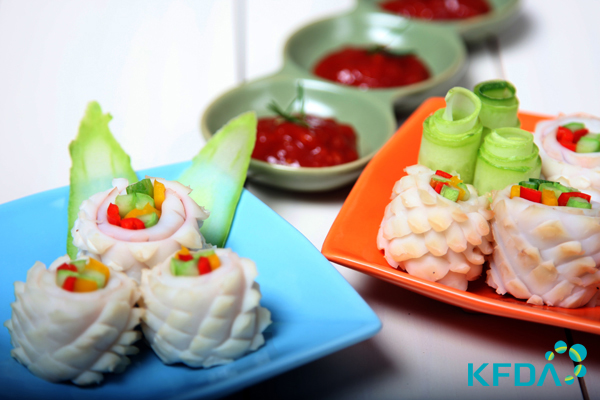
🇰🇷 The recipe below is based on official Korean MFDS (Ministry of Food and Drug Safety) data.
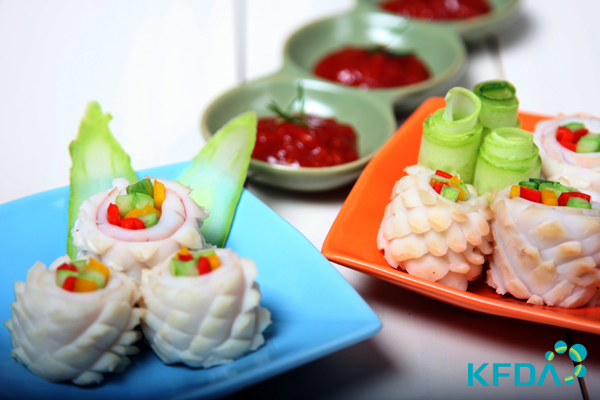
This guide, dedicated to crafting authentic Korean flavors at home, is based on official MFDS (Ministry of Food and Drug Safety) data, ensuring precise measurements and reliable nutritional information. We’ll explore how to make Ojingeochaesomaliwa Chikinyangnyeomsoseu (Squid and Vegetable Rolls with Sweet & Spicy Chicken Sauce), a delightful dish perfect for a light meal or appetizer. Learning how to make Ojingeochaesomaliwa Chikinyangnyeomsoseu means embracing a blend of fresh ingredients and vibrant sauces, offering a unique taste of Korean culinary artistry.
History of Korean Rolls and Sauces
Korean cuisine boasts a rich tradition of “mari” (rolls) and savory sauces. While Ojingeochaesomaliwa Chikinyangnyeomsoseu itself might be a more contemporary interpretation, the concept of wrapping various ingredients in thin sheets, often seaweed (gimbap) or rice paper, dates back centuries. Squid, a beloved ingredient in Korean cooking, has long been appreciated for its delicate texture and ability to absorb flavors. The “yangnyeom” (seasoned sauce) tradition, particularly the sweet and spicy variations, is a cornerstone of Korean culinary identity, evident in dishes like yangnyeom chicken, which inspires the sauce here. These dishes reflect a preference for balanced flavors and visually appealing presentations.
Ingredients for Ojingeochaesomaliwa Chikinyangnyeomsoseu
To create these flavorful squid and vegetable rolls with a delectable sweet & spicy sauce, gather the following:
For the Ojingeochaesomali (Squid and Vegetable Rolls):
* Squid body (Ojingeo momtong): 80g (cleaned, thinly sliced)
* Cucumber (Oi): 20g (julienned)
* Red bell pepper (Ppalgangpapeurika): 20g (julienned)
* Yellow bell pepper (Norangpapeurika): 20g (julienned)
For the Chikinyangnyeomsoseu (Sweet & Spicy Chicken Sauce):
* Tomato ketchup (Tomatoketchup): 8g
* Minced onion (Dajin yangpa): 8g
* Corn syrup (Mullyeot): 2g (or honey/sugar for substitute)
* Gochujang (Korean chili paste): 2g (adjust to taste for spiciness)
* Minced garlic (Dajin maneul): 2.5g
Step-by-Step Ojingeochaesomaliwa Chikinyangnyeomsoseu Recipe
Follow these precise steps for a perfect outcome.
1. **Prepare the Squid:** Bring a small pot of water to a boil. Blanch the thinly sliced squid body for just 30-60 seconds until it curls and turns opaque. Immediately transfer to an ice bath to stop cooking and maintain tenderness. Drain thoroughly and pat dry. This quick blanching is key for a tender chew.
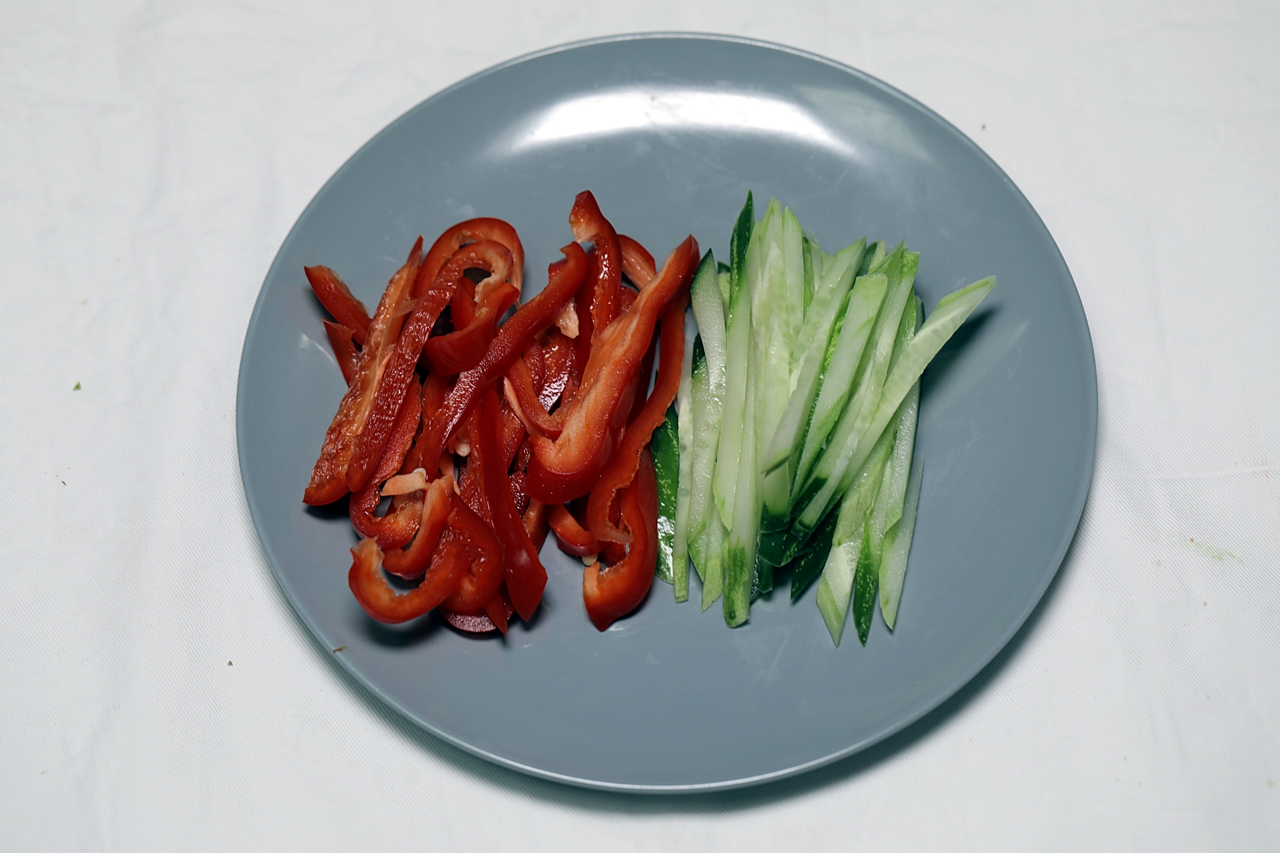
2. **Prepare the Vegetables:** Julienne the cucumber, red bell pepper, and yellow bell pepper into thin, uniform strips. These provide a crisp contrast to the squid.
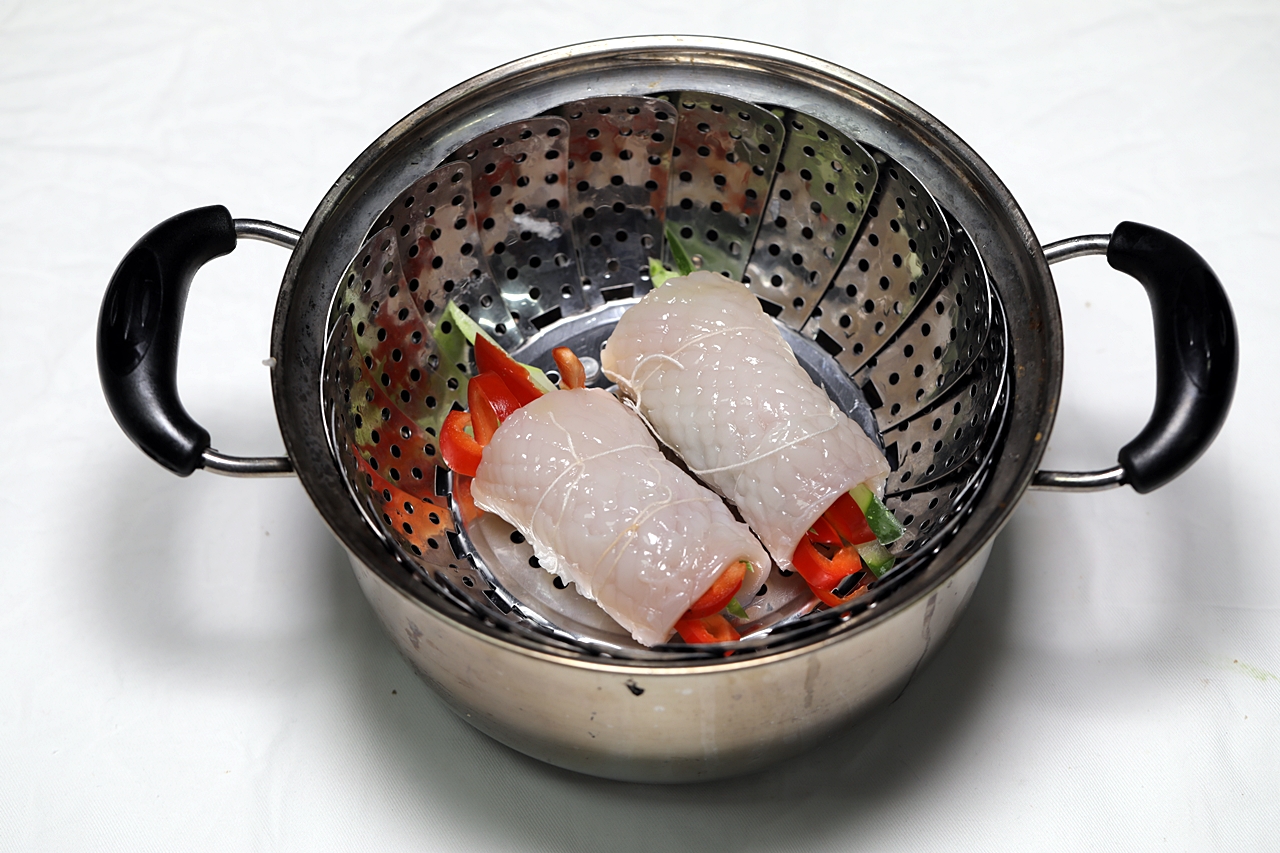
3. **Assemble the Rolls:** Lay each blanched squid piece flat. Place a small amount of each julienned vegetable (cucumber, red bell pepper, yellow bell pepper) onto one end of the squid. Carefully roll up the squid tightly to form small parcels. Repeat with all squid pieces and vegetables.
4. **Make the Chikinyangnyeomsoseu:** In a small saucepan, combine tomato ketchup, minced onion, corn syrup, gochujang, and minced garlic. Heat over low-medium heat, stirring constantly, until the sauce thickens slightly and the onion softens, about 3-5 minutes. Ensure it doesn’t burn.
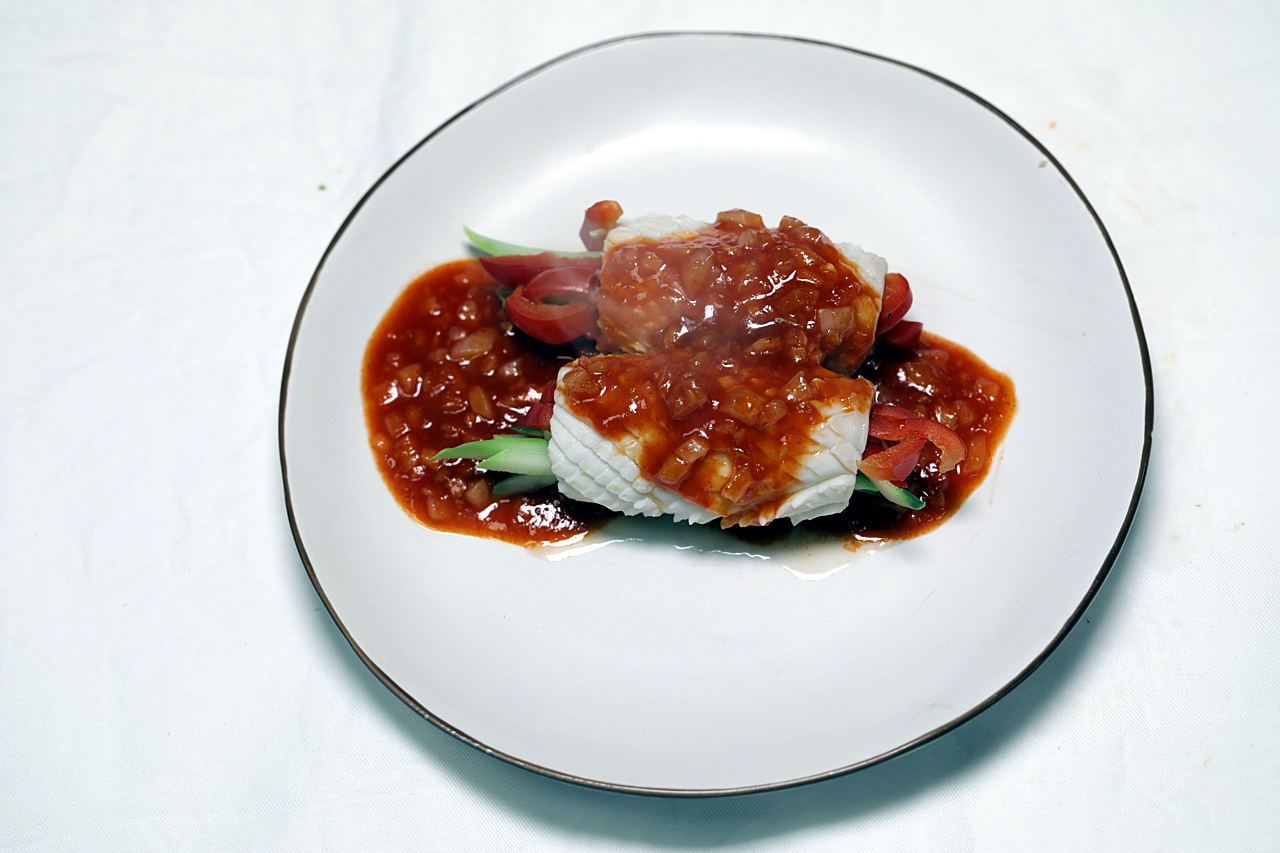
5. **Serve:** Arrange the Ojingeochaesomali rolls beautifully on a serving plate. Drizzle generously with the warm Chikinyangnyeomsoseu, or serve the sauce on the side for dipping. These rolls are best enjoyed fresh.
Nutrition Information
Based on official MFDS data, one serving of Ojingeochaesomaliwa Chikinyangnyeomsoseu contains:
* **Calories:** 106.4 kcal
Mom’s Tips for Perfect Ojingeochaesomaliwa Chikinyangnyeomsoseu
* **Squid Blanching Precision:** My mom always says, “Don’t overcook the squid!” A mere minute is usually enough. Overcooked squid becomes rubbery, so watch it closely. The ice bath immediately after is non-negotiable for that perfect tender snap.
* **Uniform Vegetable Cuts:** For an elegant presentation and even texture in every bite, make sure your vegetable juliennes are as consistent as possible. This also helps the rolls hold their shape.
* **Sauce Consistency:** When making the yangnyeom sauce, keep the heat low and stir constantly. You want it thick enough to coat, but not overly reduced or burnt. Taste and adjust gochujang for your preferred spice level.
FAQ about Ojingeochaesomaliwa Chikinyangnyeomsoseu
**Q: Can I use different vegetables in the rolls?**
A: Absolutely! Feel free to experiment with other crunchy vegetables like carrots, bell peppers of different colors, or even blanched asparagus tips, ensuring they are cut uniformly.
**Q: How can I store leftover sauce?**
A: Leftover Chikinyangnyeomsoseu can be stored in an airtight container in the refrigerator for up to 3-4 days. Reheat gently on the stovetop or in the microwave before serving.
📸 Recipe Gallery
📺 For reference, here’s a recommended YouTube video related to “오징어채소말이와 치킨양념소스”.
📹 Video sourced via YouTube. All rights belong to the respective creator.